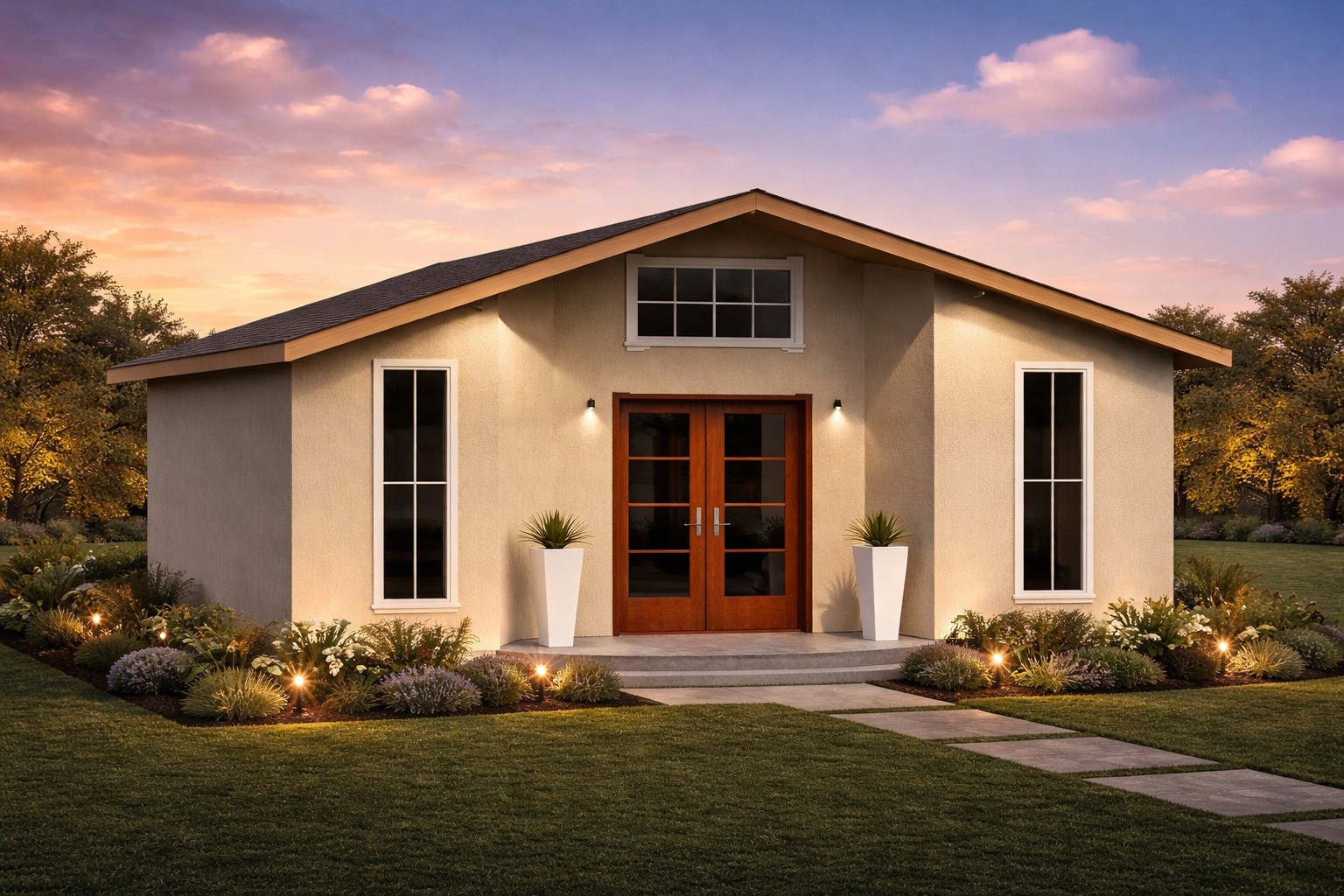
An Accessory Dwelling Unit (ADU) is a self-contained residential dwelling located on the same legal parcel as a primary single-family or multi-family home. ADUs include their own kitchen, bathroom, and sleeping area and function as fully independent living units. Across California, ADUs have become one of the most cost-effective tools to add housing to existing parcels, generate rental income, and support multi-generational living.
This guide explains what counts as an ADU, the four common types, the legal framework that governs them in California, typical sizes and costs, and how to determine whether your lot can accommodate one.
The Four Types of ADUs
California recognizes four configurations, each with its own permitting and engineering profile.
| Type | Description | Typical Size |
|---|---|---|
| Detached ADU | A new freestanding building separate from the main house | Up to 1,200 sq ft |
| Attached ADU | An addition that shares a wall with the primary residence | Up to 50% of primary or 1,200 sq ft, whichever is less |
| Conversion ADU | Garage, basement, or accessory structure converted to living space | Existing footprint |
| Junior ADU (JADU) | Created within the existing primary residence with a separate entrance | Up to 500 sq ft |
Detached ADUs offer the most design flexibility but require new foundation, structural, and utility work. Conversions are typically the cheapest path because the building shell already exists. JADUs are a special class limited to 500 sq ft and must be inside the primary dwelling.
Legal Framework: California State Law Overrides Local Zoning
California ADUs are governed primarily by Government Code §65852.2 and §65852.22. These statutes preempt many local zoning rules and require cities to permit ADUs under defined minimum standards. Key state-level guarantees include:
- Ministerial (non-discretionary) permit review with no public hearings
- 60-day permit decision deadline once an application is complete
- Minimum size of at least 800 sq ft must be allowed regardless of local rules
- Side and rear setbacks of no more than 4 feet for detached units
- No impact fees on ADUs under 750 sq ft
- HOAs cannot prohibit ADUs (Civil Code §4751)
- No owner-occupancy requirement on standard ADUs (JADUs may differ by ordinance)
Cities can be more permissive than the state minimums but they cannot be more restrictive. This is what makes ADUs so consistent across California — once you understand the state baseline, you understand 80% of any city's rules.
Why People Build ADUs
There are five common motivations:
- Rental income. A 700–1,000 sq ft ADU in coastal California typically rents for $2,000–$3,500/month. Annual yields of 6–10% on construction cost are common.
- Multi-generational housing. ADUs let aging parents or adult children live independently while remaining close.
- Property value. Appraisers credit a fully-permitted ADU at roughly 75–100% of its construction cost at resale.
- Home office or studio. A detached unit gives separation between work and home life without commuting.
- Future flexibility. Today's home office is tomorrow's rental, and the parcel's value compounds.
Typical Sizes and Cost Ranges
Construction cost varies widely by location, finish level, and site complexity. As of 2026, California averages run roughly:
| ADU Size | Typical Cost (Total) | Cost / sq ft |
|---|---|---|
| Studio / 1BR (≤500 sq ft) | $150K–$280K | $300–$560 |
| 1BR/1BA (500–800 sq ft) | $220K–$400K | $275–$500 |
| 2BR (800–1,200 sq ft) | $320K–$550K | $300–$460 |
| Garage Conversion | $100K–$200K | $200–$400 |
Construction is the largest line item, but soft costs (architectural and structural plans, geotechnical investigation, permits, fees, utility upgrades) typically add 8–15%. See our 2026 California ADU cost breakdown for a granular budget.
Engineering Considerations
Every ADU requires both architectural and structural engineering. The structural scope typically includes:
- Foundation design — slab on grade or shallow crawl-space, sized to local soil conditions
- Lateral system — shear walls or moment frames sized for the local seismic design category
- Wood-frame design per SDPWS and the California Residential Code
- Connection details (anchor bolts, holdowns, shear transfer) drawn for the contractor
- Energy-code compliance (Title 24) integrated into the wall and roof assemblies
XE Engineering's pre-engineered ADU plan catalog covers the most common configurations with a single sealed plan set. For a custom design or unusual lot, our structural engineering services deliver site-specific plans within the state's 60-day permit window.
Will My Lot Fit an ADU?
Most California single-family lots can accommodate at least one ADU because the state's 4-foot setback minimum is generous. The factors that actually constrain the buildable footprint are:
- Existing structures and where they sit on the lot
- Easements and utility setbacks (sewer line, gas main, overhead lines)
- Slope and drainage
- Tree protection ordinances
- Flood, fire, or hillside overlays specific to the parcel
Our free Site Planner tool lets you drop any XE plan footprint onto your actual parcel and see setback compliance in real time, before you commit to a design.
Next Steps
If an ADU sounds right for your property, the typical sequence is: (1) check feasibility on the Site Planner, (2) pick a pre-engineered plan or commission a custom design, (3) submit for permit, (4) build. The whole process from feasibility to occupancy usually takes 9–14 months.
Browse our ADU plan catalog, or contact XE Engineering to discuss a custom design.