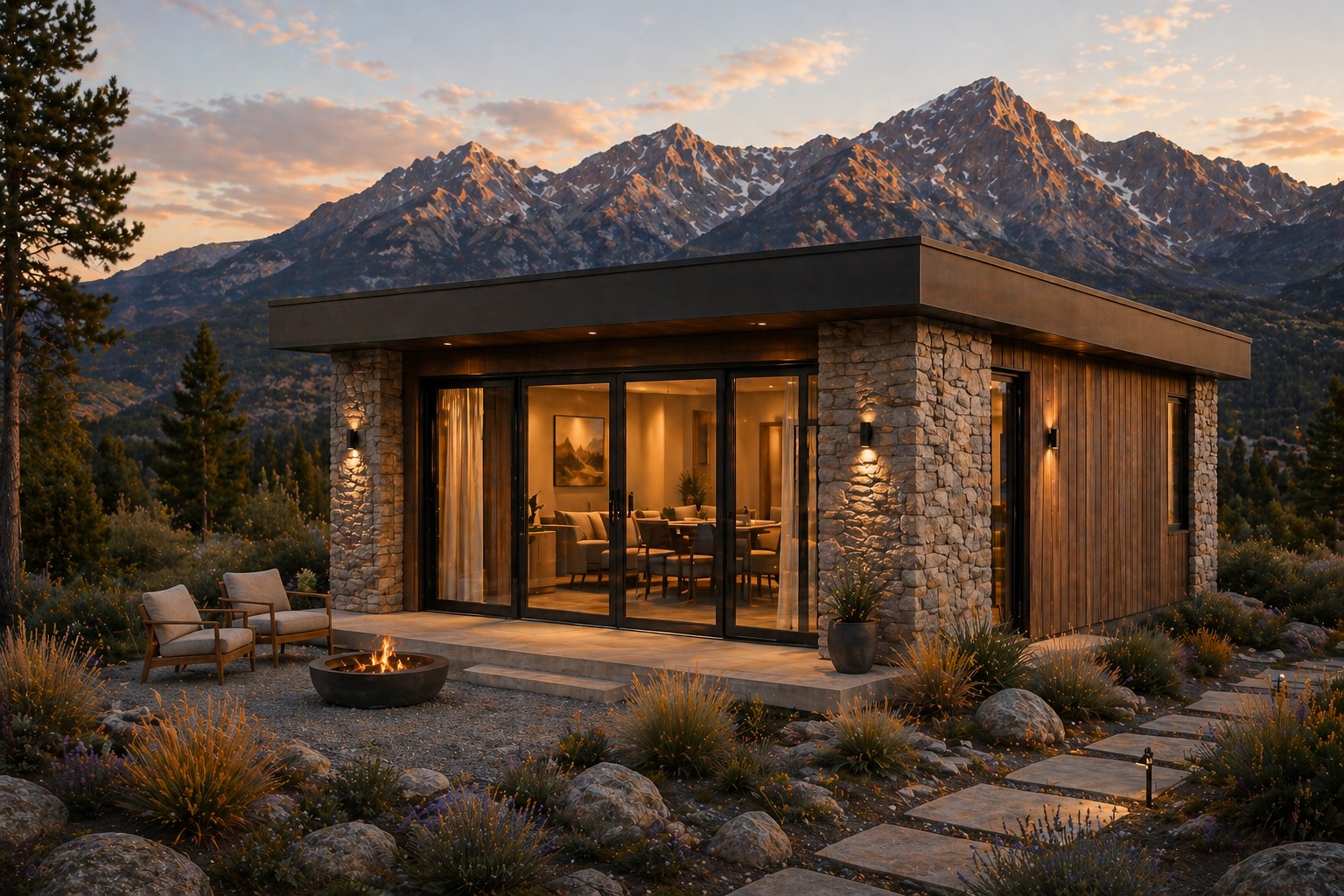
California recognizes two distinct types of secondary dwelling: the standard ADU and the Junior ADU (JADU). They share the same goal — adding a complete living unit to an existing parcel — but the legal, structural, and financial profiles are different. Choosing wrongly costs you flexibility; choosing rightly saves you money.
Side-by-Side Comparison
| Feature | ADU | Junior ADU (JADU) |
|---|---|---|
| Maximum size | 1,200 sq ft (detached) | 500 sq ft |
| Location | Anywhere on the lot meeting setbacks | Must be inside the existing primary residence |
| Separate kitchen | Required (full) | "Efficiency kitchen" (small sink, cooktop, no permanent oven) |
| Bathroom | Required (private) | May share bathroom with primary residence |
| Separate entrance | Required | Required |
| Owner-occupancy | Not required by state law | May be required by local ordinance — usually owner must live in primary OR JADU |
| Permit fees | No impact fees if ≤ 750 sq ft | Generally no impact fees |
| Utility connections | Separate meters allowed (not required) | Shared utilities with primary house |
| Construction cost (typical) | $200K–$500K | $60K–$150K |
| Time to build | 9–14 months | 3–6 months |
When a JADU Is the Right Choice
Pick a JADU if you have:
- Underused space inside the existing house (an attached garage, a downstairs bedroom suite, an unfinished basement)
- A specific person to house — aging parent, adult child, in-home caregiver — and you don't want them entirely separate
- A budget under $150K all-in
- No need for a separate utility meter
- Comfort with the owner-occupancy requirement (you or a family member must live on the property)
JADUs are dramatically cheaper because the building shell already exists. You're paying mostly for finishes, the efficiency kitchen, and the separate-entrance modifications. The structural scope is light: usually just a new shear wall around the entrance and any new partition walls.
When a Full ADU Is the Right Choice
Pick a full ADU if you want:
- Maximum rental income (a full ADU typically rents for 1.6–2.4× a JADU)
- Long-term flexibility — you may want to sell the parcel later, and full ADUs are condo-eligible under AB 1033
- True separation between primary and secondary unit
- A second full kitchen and bathroom
- A backyard structure that doesn't disturb the existing house
- Resale value — appraisers credit a full permitted ADU at 75–100% of its construction cost
Full ADUs are the bigger investment but the more durable asset.
Combining the Two
California law allows one ADU and one JADU on the same single-family lot. This is the highest-yield configuration for a typical homeowner who can afford both: the JADU houses a family member, the detached ADU rents out at market rate. Total construction is roughly $260K–$650K. Typical net rental yields run 5–9% on construction cost.
Common Misconceptions
- "A JADU is just an ADU under 500 sq ft." No — a JADU specifically must be inside the existing primary residence. A 500 sq ft detached unit is still a small ADU.
- "You need a permit for a JADU but not for an ADU." Both require building permits. Both follow ministerial review.
- "JADUs don't need structural calculations." They do, just less of them. Any new shear wall, new partition that affects load path, or new opening in a load-bearing wall requires engineering.
- "You can rent a JADU on Airbnb." Most cities prohibit short-term rentals (under 30 days) for JADUs. Long-term rentals are fine.
Engineering and Permitting
For full ADUs, our pre-engineered plan catalog covers the most common 600–1,200 sq ft footprints with sealed structural calculations and detailing. For JADUs, the work is typically site-specific because every existing house has its own load path, and we handle these as custom structural engineering projects.
Use the Site Planner to test where a detached ADU would fit on your parcel before committing to a plan.